


What Wood Fits You?
Making the perfect piece for you is what it’s all about! You can browse our selection of wood types and their differences here! Please email me if you have a special request.
.jpeg)
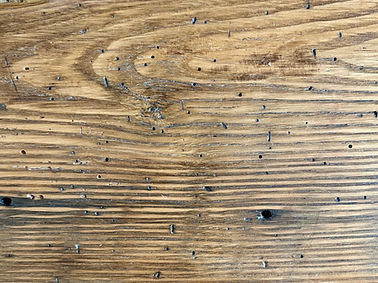
The Eastern Chestnut tree was wiped out in the early 1900’s by a fungus brought in by accident from imported plants from Asia. The wood from the dead trees was very resistant to rot, which made it a key wood for farmers to make their barns. The dead trees were also a favorite for bark beetles that give the wood its distinct look of holes and trails. Depending on how the wood was used, there may also be nail holes. The color ranges from light brown to golden brown and will take on a reddish-brown patina as it ages. Items: trays, charcuterie boards, knives, bread knives and other utensils.
Usually a lighter brown color. Depending on where it was used, there may be some worm holes/trails and nail holes. Items: trays, charcuterie boards, knives, bread knives and other utensils.


Similar to white oak, but will have a reddish-brown color to it. Depending on where it was used, there may be some worm holes/trails and nail holes. Items: trays, charcuterie boards, and bread knives.
Very light colored wood. Can have some interesting grain patterns. Depending on where it was used, there may be some worm holes/trails and nail holes. Items: trays, charcuterie boards, knives, bread knives and other utensils.


This wood has a definite reddish-brown color that will continue to get darker as the wood ages. Depending on where it was used, there may be some worm holes/trails and nail holes. Items: trays, charcuterie boards, knives, bread knives and other utensils.

My favorite wood to work with. Colors range from light brown, to reddish-brown, to almost a purple hue. Sometimes, you can get all of those colors in one piece of wood. Usually does not have any insect holes/trails, but may have nail holes. Items: trays, charcuterie boards, knives, bread knives and other utensils.

The African mahogany has a very distinct grain pattern and has a reddish-brown color that almost takes on a copper tint. My stock was salvaged from a warehouse fire in Baltimore, MD in the mid-1960’s. The salvaged wood was stored in a basement until discovered recently by family members cleaning out after the grandfather passed away. Each piece I have is still soot covered and has to be cleaned before used to make my items. Because this is technically new-old stock, it has no insect damage or nail holes. Items: trays, charcuterie boards, knives, bread knives and other utensils.
Whiskey Barrel

Whiskey barrel staves are made from white oak wood and come from Kentucky. Most pieces will have a burned side and an outside to them. The burned side is from the inside of the barrel that is burned to add flavor to the whiskey as it matures. The outside will have a lot of various colors/stains, depending on where it was during the time it had whiskey in it. Stains can be caused by glues and waxes used to seal the barrel and from the steel rings used to hold the barrel shape. I put a lot of work and care into these items to make them usable, while maintaining as much color and character as possible.